

Why do we do what we do? What motivates us? Is it worth it?

What is the exact need of our young ones right now?
-
Today, one of the biggest challenges in Northern Uganda is illiteracy. In Northern Uganda, two-fifths of working-age adults have no formal education. The result is a cycle of poverty that needs to be broken. To become lifelong learners and to gain access to global opportunities, children need to know how to read and write which can happen through services that excite them to read more often.
-
Moving beyond victimhood and becoming the master of one’s destiny is the everlasting solution to one’s problems and uncertainty. The children cannot do this if they cannot read and write.
-
Twenty-first-century skills require stewardship. The future of northern Uganda depends on children growing up knowing that it is their responsibility to protect Mother Earth from damage for sustainability.
-
Over twenty years of war and the stories of northern Uganda are still told by other people who did no even experience the war themselves. It is time to change that. We should let the children tell their stories to the world and be heard.
-
Safety first. Children need peace to grow into successful adults. Literacy helps the kids to avoid exploitation as well as to know where they can run to when they do not feel safe.
-
“Literacy in the early years is a crucial part of growth that helps the children to become great readers and lifelong learners.”
“Literacy opens doors for our people, allowing them to tap from the treasures of Mother Earth. It brings the youngsters to the face of the world, ushering them to the freedom of life beyond their borders.” Rwot Onen Acana, Acholi Paramount Chief.
Why is Literacy our focus?
-
Literacy improves the economy and creates jobs
Literacy improves the economy and creates jobs - 171 million people could escape extreme poverty if all students in low-income countries had basic reading skills. (Fact: illiteracy costs the global economy $1.5 trillion annually).
-
Literacy improves health
Literacy improves health – adult literacy reduces infant mortality rate, literate patients follow doctors’ instructions and they can adopt more preventive measures of living.
-
Literacy promotes lifelong learning and helps build life skills
Literacy promotes lifelong learning and helps build life skills - Literacy and numeracy are a prerequisite for a broader education. Students who struggle to read are more likely to drop out of school before they can complete a basic education.
-
Literacy builds self-esteem and overall quality of life
Literacy builds self-esteem and overall quality of life – people who can express themselves in writing and affluent speech will more easily overcome anxiety and depression and tap many more opportunities that will make their lives better.
-
Literacy promotes gender equality
Literacy promotes gender equality - “Every literate woman marks a victory over poverty,” said former United Nations Secretary-General Ban Ki-moon. This means through literacy we are helping bridge the gender inequality in the job market and women’s engagements in matters of society.
-
Literacy promotes democracy and peace
Literacy promotes democracy and peace – illiteracy weakens communities and undermines democratic processes through marginalization and exclusion.
So what are the proven ways of promoting literacy? Are we doing it right?

Writing and reading
Writing practice offers a better understanding of language structure, which enhances literacy. Reading offers the exposure to linguistic understanding, a skill that improves our ability to communicate through our writing. In short, writing, reading, and literacy are codependent skills.
LULA Team does this by including the skills of phonics in their daily work.

Encouraging enrollment in schools
It all begins with the idea of going to school. Learning happens best in school where the kids can relate with fellow learners. The more children we have in school trying to learn how to read and write, the fewer children will be left out there with no idea of where to start from.

Storytelling
Children who hear stories often improve their reading skills because they are interested in reading other related stories and information. Storytelling can be used in a myriad of ways to improve students' oral communication skills both in speaking and in writing.

Practical Learning
A hands-on approach that allows children to actively explore their physical world helps them learn best. If a kid learns by doing the work, it is something they will not only forget but will cherish in their memory for a long time.
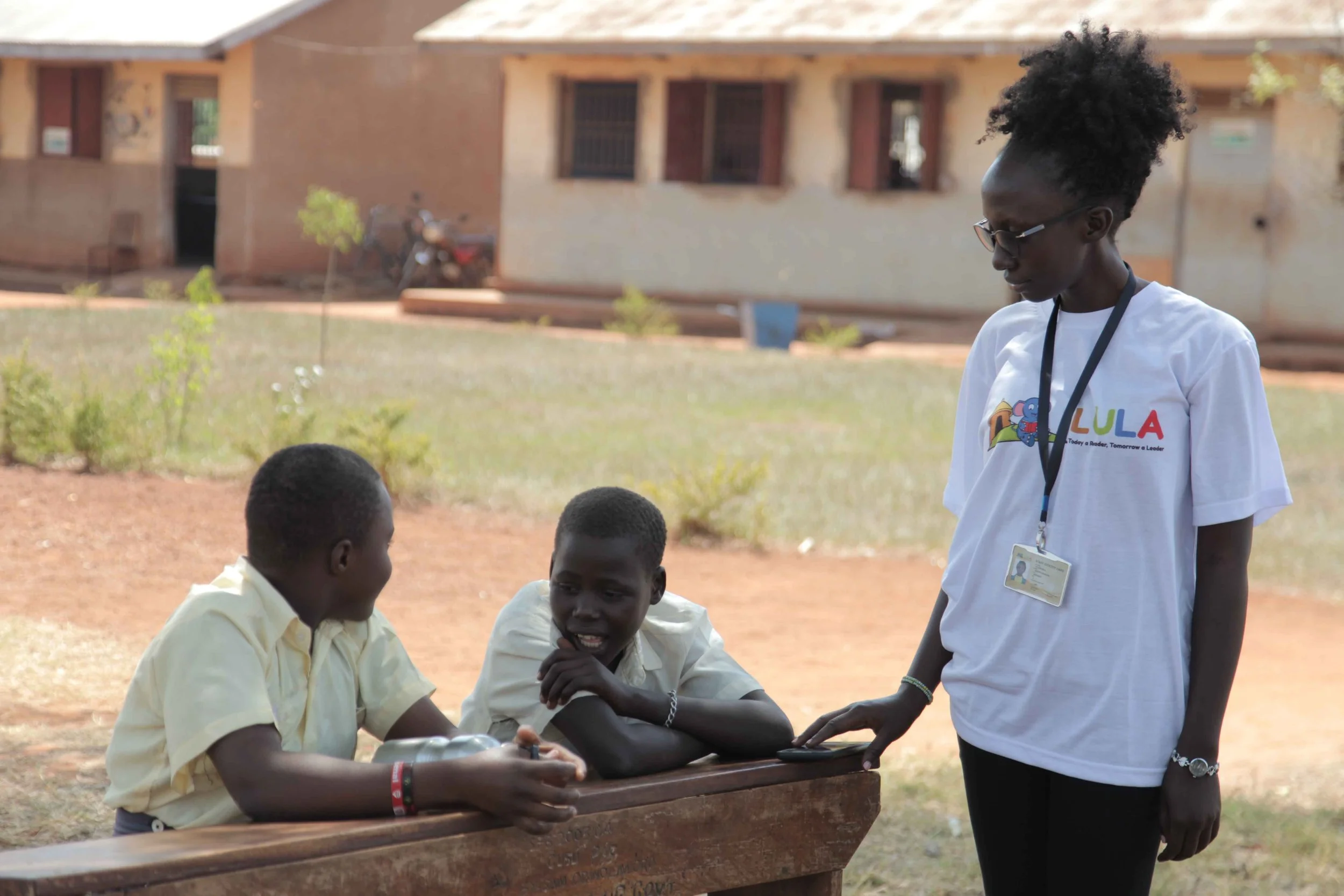
Exciting learning environments
Educators can expand the literacy experiences of young kids by offering materials, routines, and interactions that set the stage for rich language and literacy activities and exchanges.
We do just that.